

Introduction
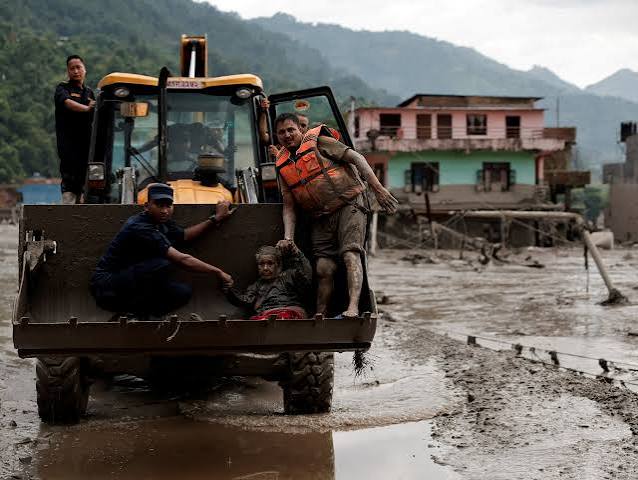
Nepal is facing a major flash flood disaster after a sudden and powerful surge of water swept through northern and central parts of the country on Wednesday, August 26, 2026. The worst-affected area is Rasuwa, near the Nepal–Tibet border, where the Bhote Koshi River suddenly rose and caused widespread destruction.
According to Nepal Police, the death toll had reached at least 162 by the morning of August 27, while hundreds of people were still missing. Rescue teams were working in difficult conditions across several districts. (Radio Nepal Online)
The Nepal flood has also become a concern for India because water from the Bhote Koshi eventually joins the Trishuli system and flows onward as the Gandak River. This has put areas of Bihar and Uttar Pradesh on alert.
This article explains what happened in Nepal, why the flash flood was so sudden, what is known about the glacier and Tibet connection, and what the situation means for the Gandak and Koshi river areas.
Nepal Floods Today
What Happened in Nepal?
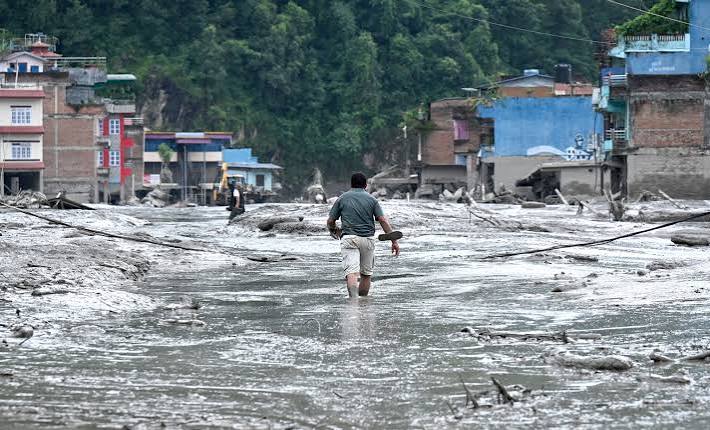
The disaster began when an unusually large amount of water and debris entered the Bhote Koshi River from the direction of Tibet. The flood struck the Rasuwa district at around 8:40–9:00 in the morning.
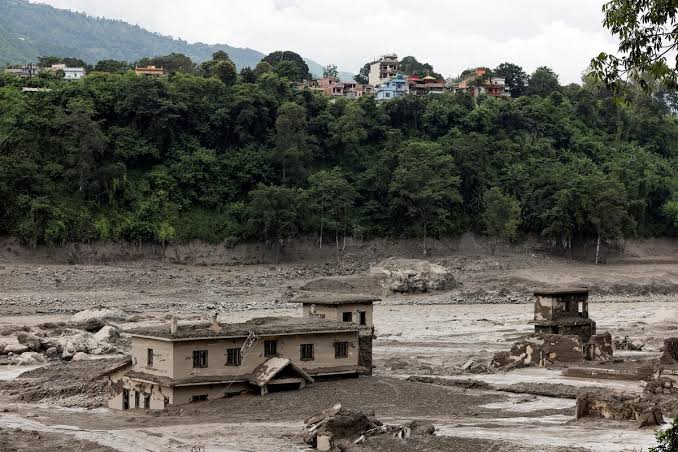
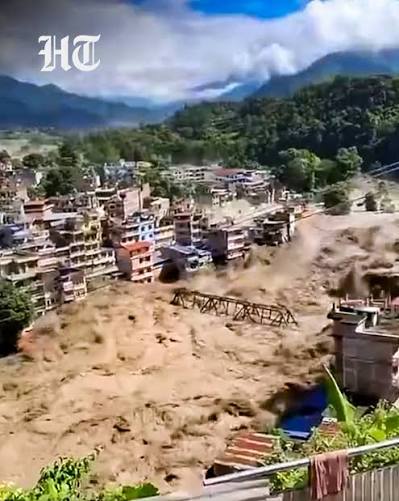
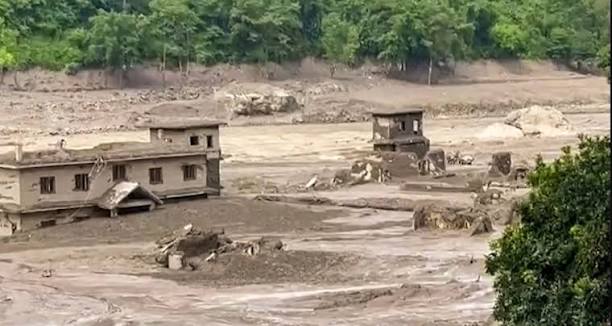
The areas around Timure and Syafrubesi were among the worst affected. Water, mud, rocks and debris moved with great force, destroying houses, vehicles, bridges, roads and other infrastructure.
The Kathmandu–Kerung trade route was also badly affected. Hydropower projects and electricity infrastructure suffered major damage. (The Himalayan Times)
The speed of a flash flood makes it especially dangerous. Unlike a normal river flood, where water may rise over several hours or days, a flash flood can reach communities within a very short period.
People living near rivers often have little time to move to safe locations.http://sagarmanuja.in
Nepal Flood Today: Latest Situation
The flood situation remains serious because rescue workers are still searching for missing people.
Nepal Police reported at least 162 deaths by the morning of August 27. Bodies have been recovered from several districts, including Rasuwa, Nuwakot, Dhading, Gorkha, Chitwan, Tanahun and the Nawalparasi areas. (Radio Nepal Online)
The number of missing people has also changed as authorities continue to collect information from families, tourists, workers and government agencies.
The Nepal Tourism Board had earlier reported hundreds of travellers missing in the affected region, including foreign nationals and Indian citizens. (India Today)
Because communication networks and roads were damaged, authorities have faced difficulty in confirming the exact condition of everyone in the affected areas.
Why Were There Flash Floods in Nepal?
One of the biggest questions is the reason behind the Nepal flash flood.
Early reports considered several possible explanations, including an earthquake, an avalanche, a rockslide and a glacial event.
Later satellite and geological assessments increasingly pointed toward an ice-rock avalanche or glacial collapse in the Himalayan upstream area as the main trigger. Nepal’s disaster authorities reported that preliminary satellite analysis traced the source to an ice-rock avalanche roughly 20 kilometres northeast of the Rasuwa border area. (The Himalayan Times)
A glacial collapse can release a huge amount of water, ice, rocks and mud in a very short time. When this material enters a steep mountain river, the river can become a powerful wall of water and debris.
That is why the event was so destructive.
The Tibet Connection
The word Tibet has become important in reports about the Nepal flood because the Bhote Koshi River begins in the Himalayan region north of Nepal.
The flood surge came from the direction of Tibet before entering Nepal’s Rasuwa district. The river then continued through Nepal and became part of the downstream river system that ultimately reaches India.
Reports indicate that an ice and rock event in the high Himalayan region may have generated the sudden surge. A magnitude 4.4 earthquake was also recorded in the region around the same time, although the exact relationship between the earthquake and the flood event remains an area of investigation. (India Today)
It is therefore important not to say that the earthquake alone caused the flood. Current evidence points more strongly toward a glacial or ice-rock collapse, while scientists and authorities continue to study the exact chain of events.https://www.google.com/search?sca_esv=1e6d41c8364089b5&rlz=1C1YRZT_enIN1210IN1210&sxsrf=APpeQns_4Gray8xrk_iAIKYX5oc85rt5Xg:1787809885307&udm=2
Sure. Here is the same Nepal floods content in a table format, with the important keywords clearly organized:
| Section | Main Topic | Important Keywords |
|---|---|---|
| 1 | Introduction | Nepal floods, Nepal flood today, Nepal news, Nepal flood news |
| 2 | What Happened | Nepal flash flood, flash floods Nepal, flood in Nepal, what happened in Nepal |
| 3 | Latest Situation | Nepal news today, Nepal floods today, Nepal flood situation |
| 4 | Flood Reason | Nepal flood reason, Nepal floods reason, flash flood reason |
| 5 | Tibet Connection | Tibet, China, Nepal-Tibet border, Bhote Koshi River |
| 6 | Rasuwa | Rasuwa Nepal, Rasuwa, Rasuwa flood, flash flood Rasuwa |
| 7 | Nepal Map | Nepal map, Nepal rivers, Nepal flood route |
| 8 | Gandak River | flood situation near Gandak river, Gandak River, Gandak flood |
| 9 | Bihar | Bihar, Bihar news, Bihar flood, Nepal Bihar flood |
| 10 | Koshi River | flood situation near Koshi river, Koshi River, Koshi flood |
| 11 | Glacier | glacier, glacial flood, glacial collapse, Himalayan glacier |
| 12 | Climate Change | climate change, Himalayan flood, extreme weather |
| 13 | Infrastructure Damage | roads, bridges, hydropower projects, electricity |
| 14 | Rescue Operation | Nepal rescue operation, Nepal Army, rescue teams, helicopters |
| 15 | India Impact | India, Bihar, Uttar Pradesh, Nepal India flood |
| 16 | Flood Alert | flood alert, Bihar flood alert, river water level |
| 17 | Flash Flood Meaning | flood, flash flood, flash floods Nepal |
| 18 | Sadhguru | Sadhguru, Nepal flood discussion, environment |
| 19 | Safety Tips | flood safety, flash flood safety, evacuation |
| 20 | Future Risk | early warning system, glacier monitoring, flood prevention |
| 21 | Current Updates | Nepal news today, Nepal floods today, Nepal flood news |
| 22 | Conclusion | Nepal floods, Nepal flash floods, Bihar, Gandak, Koshi |
SEO Keyword Table
| Keyword Type | Keywords |
|---|---|
| Primary Keyword | Nepal floods today |
| Primary Keyword | Nepal flood |
| Primary Keyword | Nepal floods |
| Secondary Keyword | Nepal news |
| Secondary Keyword | Nepal news today |
| Secondary Keyword | Nepal flood news |
| Secondary Keyword | Nepal flash flood |
| Secondary Keyword | flash floods Nepal |
| Secondary Keyword | flood in Nepal |
| Secondary Keyword | Nepal flood reason |
| Location Keyword | Rasuwa Nepal |
| Location Keyword | Rasuwa |
| Location Keyword | Tibet |
| Location Keyword | Bihar |
| Location Keyword | China |
| River Keyword | Gandak River |
| River Keyword | flood situation near Gandak river |
| River Keyword | Koshi River |
| River Keyword | flood situation near Koshi river |
| Nature Keyword | glacier |
| Nature Keyword | glacial flood |
| Nature Keyword | flash flood |
| Related Keyword | Bihar news |
| Related Keyword | Sadhguru |
| Informational Keyword | what happened in Nepal |
| Informational Keyword | Nepal floods reason |
| Informational Keyword | Nepal flash floods reason |
| Navigation Keyword | Nepal map |
FAQs About Nepal Floods
| No. | Question | Answer |
|---|---|---|
| 1 | What happened in Nepal? | Nepal experienced severe flash floods in parts of the country, especially around Rasuwa. The sudden flow of water, ice, rocks and debris caused serious damage to roads, bridges, buildings and other infrastructure. |
| 2 | What is the main reason for the Nepal floods? | Initial reports and assessments point toward an ice-rock avalanche or glacial event in the Himalayan region as a major trigger. Heavy rain, unstable mountain slopes and other natural factors can also increase flood risk. |
| 3 | Where did the Nepal flash flood happen? | Rasuwa, including areas around Timure and the Bhote Koshi River, was among the badly affected locations. Other parts of Nepal were also affected by flooding and landslides. |
| 4 | What is Rasuwa Nepal known for? | Rasuwa is a mountainous district in northern Nepal near the Tibet border. It has steep valleys, rivers, hydropower projects and important trade routes. |
| 5 | Is Tibet connected to the Nepal flood? | Yes. The affected Bhote Koshi river system is connected to the Himalayan region near Tibet. Reports indicate that the sudden flood surge came from the direction of the Tibet region. |
| 6 | What is a flash flood? | A flash flood is a sudden and rapid rise of water. It can happen after intense rainfall, landslides, glacier-related events or sudden releases of water and can reach communities very quickly. |
| 7 | What is the Nepal flood situation near the Gandak River? | The Rasuwa flood is connected to the Bhote Koshi–Trishuli–Gandak river system. Because these rivers eventually flow toward India, authorities in downstream areas monitor water levels carefully. |
| 8 | Will the Nepal flood affect Bihar? | Flooding in Nepal can affect downstream areas of Bihar through rivers such as the Gandak and Koshi. However, the impact depends on river levels, rainfall, barrage operations and local conditions. |
| 9 | What is the flood situation near the Koshi River? | The Koshi is a separate major river system from the Rasuwa flood route. People living near the Koshi should follow local river-level updates and official Bihar flood alerts. |
| 10 | What role do glaciers play in Nepal floods? | Glaciers can contribute to floods when ice, rocks or glacial lakes become unstable. A sudden glacial collapse or related event can send a large amount of water and debris downstream. |
| 11 | Is climate change responsible for the Nepal floods? | Climate change can increase long-term risks in the Himalayas by affecting glaciers, snow and rainfall patterns. However, it is not correct to say that climate change alone caused this specific flood without detailed scientific evidence. |
| 12 | Why are flash floods dangerous in Nepal? | Nepal has steep mountains and narrow river valleys. When water suddenly enters these valleys, it can move extremely fast and carry mud, rocks, trees and other debris. |
| 13 | What damage did the Nepal floods cause? | The floods damaged roads, bridges, homes, vehicles, hydropower facilities and other infrastructure. Some areas also became difficult to reach because transportation and communication links were damaged. |
| 14 | What are authorities doing after the Nepal floods? | Nepal’s security forces and emergency teams are involved in rescue and relief operations. Teams are searching for missing people, helping affected communities and providing emergency assistance. |
| 15 | What should people do during a flash flood? | People should move away from rivers and low-lying areas, avoid crossing flooded roads or bridges, follow evacuation orders and depend on official warnings for safety information. |
| 16 | What is the connection between Nepal and Bihar floods? | Several rivers originate or flow through Nepal before entering Bihar. Therefore, heavy rainfall or sudden water releases in Nepal can sometimes increase downstream flood risk in Bihar. |
| 17 | Where can people check Nepal news today? | People should check reliable Nepal government agencies, disaster-management authorities, established news organizations and official local administration channels for the latest updates. |
| 18 | Is the Nepal flood related to an earthquake? | An earthquake was reported around the region during the event, but it should not automatically be described as the sole cause. Investigations have focused strongly on the ice-rock or glacial event. |
| 19 | What is the importance of the Nepal map for understanding floods? | A Nepal map helps show the location of Rasuwa, Tibet, the Bhote Koshi, Trishuli and other river systems. It also helps explain how water can travel from mountain areas toward India. |
| 20 | Why is the Nepal flood important for India? | Nepal and India share several river systems. A major flood in Nepal can potentially affect downstream areas, particularly in states such as Bihar and Uttar Pradesh, making cross-border flood monitoring important. |
Rasuwa Nepal: Why Was the District Hit So Hard?
Rasuwa Nepal is a mountainous district close to the Tibet border. The area has steep valleys, fast-flowing rivers, mountain roads and hydropower projects.
These geographical conditions can make flash floods extremely dangerous.
When a large amount of water suddenly enters a narrow Himalayan valley, the water has limited space to spread. It can therefore move downstream with tremendous force.
Timure, near the Rasuwagadhi border crossing, was particularly affected. Roads, bridges, vehicles and buildings were swept away or damaged. The disaster also affected people working in hydropower projects and border-related services










Leave a Reply